
Modern e-commerce teams are not short on information. If anything, they are buried in it.
There are dashboards for sales, dashboards for retail media, dashboards for search visibility, dashboards for content health, dashboards for inventory, and dashboards for promotions. On paper, that sounds like progress. In practice, it often leaves brands staring at the problem instead of fixing it.
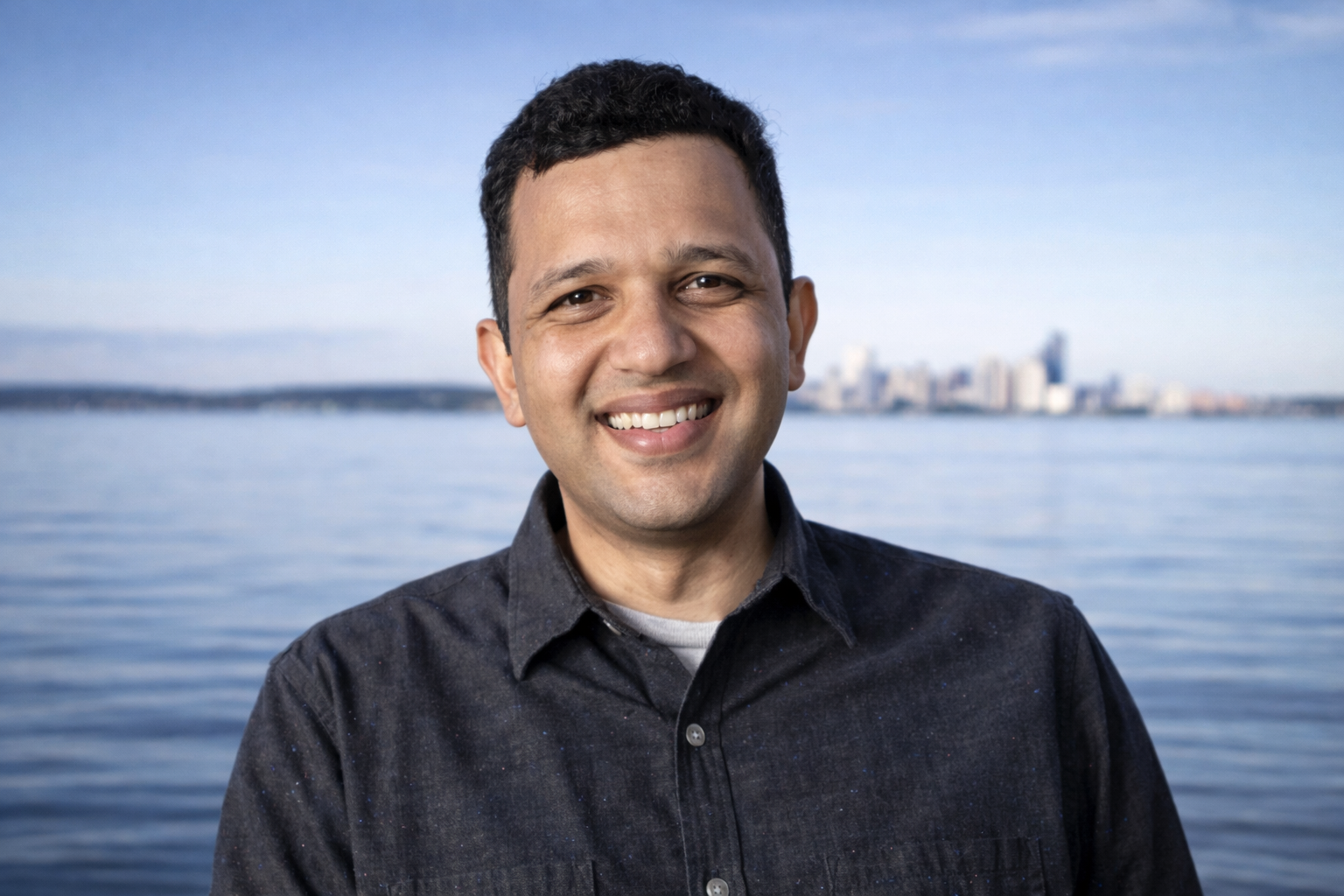
That is the gap Guru Hariharan has been working to close with CommerceIQ.
As the founder and CEO of CommerceIQ, Hariharan has built the company around a simple but increasingly important idea. Data only matters if it helps teams act faster, prioritize better, and improve performance while there is still time to influence the outcome. That sounds obvious, but it is still where many e-commerce organizations struggle most.
The challenge is not that brands cannot see what is happening. The challenge is that by the time they sort through the signals, align teams, and make the necessary changes, the opportunity may already be gone. A product page issue keeps hurting conversion. A media campaign keeps spending against the wrong signals. A search ranking slips. A pricing gap opens up. Inventory goes out of alignment. Everyone can see the issue, but no one moves fast enough.
That is the problem CommerceIQ is trying to solve.
Why e-commerce teams still struggle to act on their data
A lot of e-commerce technology was built to improve visibility. That made sense for the moment. Teams needed better reporting, cleaner analytics, and easier access to performance data across retailers and channels.
But visibility alone was never the finish line.
Many brands now operate across Amazon, Walmart, Target, Instacart, Kroger, and a growing list of other retail environments. They manage large catalogs, changing retailer rules, shifting search behavior, tightening margins, and media programs that need constant attention. Even when the data is available, turning that information into quick, coordinated action is another matter.
This is where friction builds.
One team owns content. Another owns media. Another watches sales and forecasting. Someone else is responsible for retailer relationships. In many companies, the work is still split across spreadsheets, disconnected platforms, agency workflows, and manual follow-ups. That slows everything down.
So the real issue is not whether teams have data. It is whether they can operationalize that data before performance slips further.
That point has become central to the way CommerceIQ talks about the market today. The company is not simply presenting itself as another analytics layer. It is pushing a more execution-driven view of e-commerce, where insight is only useful if it leads directly to action.
Who Guru Hariharan is and why his perspective carries weight
Guru Hariharan did not come into e-commerce from the outside looking in. His background helps explain why CommerceIQ has such a strong operational lens.
Before founding CommerceIQ in 2012, Hariharan held leadership roles at Amazon and eBay. At Amazon, he worked on automated vendor management and supply chain systems. At eBay, he served as General Manager of Marketplace Experience and helped lead the launch of programs including Fast N’ Free shipping and Global Returns.
That matters because it means he has spent years inside businesses where scale, automation, and marketplace mechanics are not abstract ideas. They shape everyday performance.
His background in machine learning also fits naturally with the direction CommerceIQ has taken. Rather than treating e-commerce as a reporting problem, Hariharan’s approach treats it as a decision and execution problem. In other words, the question is not just what happened. The question is what should happen next, how quickly the team can respond, and how much of that work can be handled intelligently at scale.
That framing feels especially relevant now because e-commerce is becoming more algorithmic, more competitive, and less forgiving of delay.
What CommerceIQ is trying to solve for modern brands
CommerceIQ sits in a part of the market where brands are trying to unify multiple moving pieces that were historically handled in silos.
Sales performance, digital shelf health, retail media efficiency, product content, pricing signals, availability, and category-level movement all affect one another. But in many companies, they are still monitored separately and acted on separately.
CommerceIQ’s pitch is that this separation creates blind spots and slows down response times. The company’s platform is built around unifying sales, media, and digital shelf data so brands can move from fragmented visibility to coordinated execution.
That is a meaningful distinction.
When sales data sits in one place, shelf data sits in another, and media data is interpreted through a different workflow entirely, teams can miss the real cause of performance problems. A weak campaign might not only be a media issue. It could also be tied to product page quality, pricing pressure, low availability, or a drop in discoverability. If those signals are disconnected, the response usually becomes slower and less accurate.
CommerceIQ is designed around the idea that these decisions should not be isolated from one another. They should be connected in one operating layer that helps teams understand what is happening and respond before the problem gets expensive.
How CommerceIQ turns data into action
The strongest part of the CommerceIQ story is not just that it collects information. A lot of platforms do that. What makes the positioning more interesting is the company’s focus on the layer between insight and execution.
CommerceIQ has increasingly framed that layer through AI agents and role-specific AI teammates. The idea is to reduce the time between spotting a problem and doing something about it.
Instead of making teams dig through disconnected reports and manually prioritize dozens of issues, the platform is meant to help surface what matters most, diagnose likely causes, and support faster action across key areas of e-commerce operations.
That includes work tied to digital shelf monitoring, retail media management, content optimization, and sales performance.
For e-commerce teams, that shift matters because the bottleneck is often not visibility. It is bandwidth.
A brand may know that a product listing is underperforming, but updating that listing across a large catalog takes time. A team may know that media spend is inefficient, but constant bid and budget changes across retail networks are difficult to manage manually. A category lead may see a sales gap forming, but identifying the best corrective action across pricing, promotions, or assortment is rarely simple.
This is where CommerceIQ tries to move beyond passive reporting.
Its current messaging leans on helping brands analyze performance, diagnose issues, and take action faster, with a unified engine that draws signals from sales, media, supply chain, and the digital shelf. That push reflects a broader trend in retail software. Teams no longer want tools that simply tell them what went wrong. They want systems that help them respond while the window to fix it is still open.
Where the biggest execution gaps usually show up
The gap between data and action becomes easier to understand when you look at where brands most often lose momentum.
Digital shelf performance
Digital shelf issues are often visible before they are fixed. Content gaps, missing images, poor PDP compliance, low discoverability, Buy Box losses, weak assortment coverage, and review-related problems can all drag down performance. The problem is not noticing them. The problem is addressing them across enough products, retailers, and markets without overwhelming the team.
CommerceIQ’s digital shelf positioning is closely tied to this reality. It emphasizes real-time monitoring of content accuracy, availability, pricing, discoverability, and related signals so teams can act before those issues turn into revenue loss.
Retail media efficiency
Retail media is another area where speed matters. A campaign may look acceptable in a dashboard while deeper issues are building underneath. Budget pacing can drift. Bids can miss the right demand signals. Creative and content quality can undermine paid performance. Incrementality may be weaker than headline metrics suggest.
If teams are reacting too slowly, spend keeps flowing while returns quietly weaken.
CommerceIQ has leaned into this challenge by talking about shelf-aware media optimization and signal-rich bid and budget decisions. That matters because retail media performance is rarely a standalone number. It is often shaped by the same product, pricing, and content realities that affect organic performance.
Sales and gap-to-plan management
Sales teams also feel the action gap in a practical way. It is one thing to know a brand is behind plan. It is another to understand why, prioritize the right levers, and move quickly enough to close the gap.
That is where execution becomes more valuable than more reporting.
If a platform can help identify the key drivers behind performance changes and recommend actions in real time, teams spend less energy assembling the story and more energy fixing the outcome.
Product content and compliance
Content work often sounds simple until the catalog gets large. Updating product titles, bullets, images, A plus content, claims, and retailer-specific requirements across hundreds or thousands of SKUs is rarely quick. It is one of the clearest examples of how brands can know exactly what needs to change and still struggle to make the change happen fast enough.
CommerceIQ’s current product language around content optimization, PDP compliance, and scaling execution across thousands of SKUs fits directly into this pain point.
Why speed matters more in algorithmic retail
Hariharan’s broader point is not just that e-commerce has become more complicated. It is that the environment now moves at a pace that manual systems were never built to handle.
Retail platforms are increasingly algorithmic. Search rankings shift. Retail media dynamics evolve in real time. Product discoverability depends on content quality, pricing, availability, reviews, and other signals that do not stand still. Teams cannot afford to wait for weekly reporting cycles and slow handoffs when the shelf is changing every day.
That is one reason CommerceIQ now talks so much about agentic commerce and algorithmic retail. The argument is that brands need an execution model capable of keeping pace with an environment governed by algorithms.
In plain terms, that means brands need more than another dashboard.
They need systems that can keep scanning, prioritizing, and supporting action across the full catalog, including the long tail of products that human teams often do not have enough time to manage closely.
That point is important because many performance gains in e-commerce do not come from one dramatic fix. They come from hundreds of smaller corrections made consistently across content, media, availability, and pricing. When those actions happen faster, the compounding effect becomes meaningful.
Guru Hariharan’s bigger bet on AI in e-commerce operations
The most interesting thing about Hariharan’s current positioning is that it reflects a larger shift in retail technology.
For years, software companies competed on better analytics, cleaner dashboards, and stronger reporting. That still matters, but it is no longer enough on its own. The more urgent question now is whether AI can help e-commerce teams work in a more outcome-focused way.
That is where CommerceIQ is placing its bet.
The company’s recent messaging repeatedly returns to the same theme. The future is not about adding another layer of observation. It is about giving teams more agency. In practice, that means AI agents and AI teammates that can support execution across content, shelf, media, and sales workflows while human teams focus on strategy, priorities, and guardrails.
That does not mean people disappear from the process. It means their role shifts upward.
Instead of spending so much time pulling reports, cleaning spreadsheets, chasing inconsistencies, and trying to prioritize dozens of alerts, teams can spend more time deciding what matters most and shaping the next move.
That is a more useful way to think about AI in commerce. Not as a novelty, and not as generic automation, but as infrastructure for faster, better decisions in the places where delay is expensive.
What brands can take from this approach
Even for companies that do not use CommerceIQ, the larger lesson still stands.
E-commerce performance improves when brands stop treating insight as the finish line.
They need operating systems, workflows, and team structures that make action easier. They need tighter connections between media, shelf, content, and sales. They need fewer delays between noticing a problem and responding to it. They need a better way to manage the growing complexity of retail environments that are always on and always changing.
That is what makes Guru Hariharan’s angle worth paying attention to. He is not simply arguing that brands need more e-commerce intelligence. He is arguing that intelligence without execution is incomplete.
That is a timely argument because many brands are already seeing the downside of the old model. More reports do not automatically create better outcomes. More dashboards do not automatically create faster action. More agencies and more manual oversight do not automatically solve a speed problem.
At some point, the question becomes much simpler.
Can your team turn signals into action before the market moves again?
That is the question CommerceIQ is trying to answer.